Valve just launched the new Steam Machine. After years of delays, leaks, and community speculation, the living room gaming PC is finally real. It sits in your entertainment center. It runs SteamOS. And it costs more than most people expected.
The steam machine release date is here: units started shipping in late June 2026. Reviews from Digital Foundry, IGN, Linus Tech Tips, and Aftermath all went live on June 22. The verdict? The hardware is genuinely impressive. But the steam machine price is a serious conversation starter.
This article covers everything you need to know. We go through the specs, the new Steam Controller, the real-world performance, what reviewers actually said, and whether the steam machine cost makes sense for you right now.
Steam Machine Specs: What Valve Built This Time
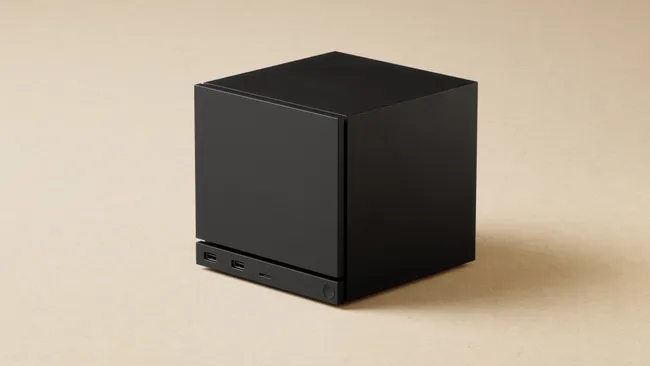
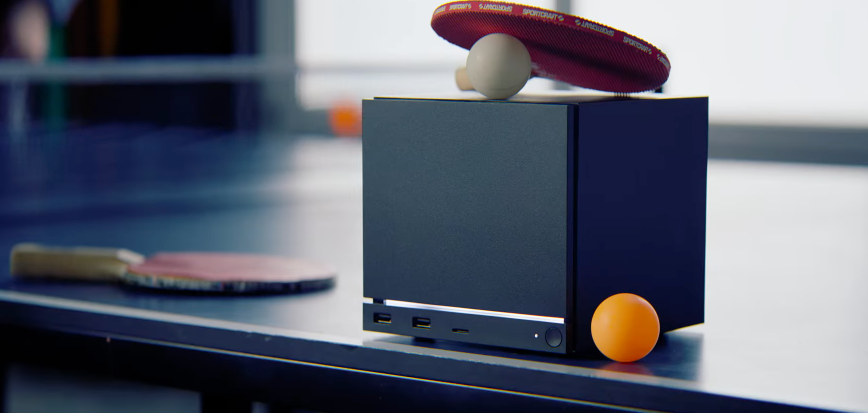
The new Steam machine hardware is a near-perfect cube. It measures roughly 6.4 x 6.1 x 6 inches. Small enough to tuck next to a TV, it also runs quiet enough for any living room.
Inside, Valve went with a semi-custom AMD chip design. The CPU uses 6 Zen 4 cores, runs up to 4.8 GHz, and has a 30W TDP. The GPU is a semi-custom AMD RDNA 3 GPU with 28 compute units, 8GB of GDDR6 VRAM, and a 2.45 GHz sustained clock speed at 110W TDP.
These are two separate chips on the same motherboard, not an APU. Valve says this gave them better control over thermals and form factor.
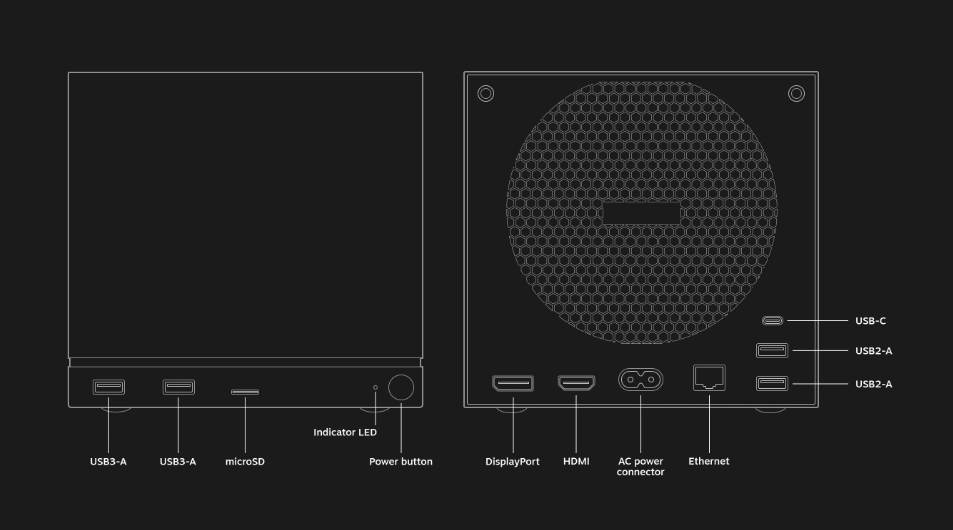
RAM is 16GB DDR5 via SODIMMs. Storage comes in two options: 512GB or 2TB, both using M.2 2230 SSDs. There is also a microSD card slot, just like the Steam Deck. Swap the card between the steam machine, a Steam Deck, or a Steam Frame, and your steam library comes with it.
Connectivity is solid. The rear has DisplayPort 1.4, HDMI 2.0, two USB-A Gen 2 ports, one USB-C 3.2 Gen 2, and Gigabit Ethernet. The front has two USB-A Gen 3 ports and the microSD slot. Wi-Fi 6E and Bluetooth are both built in, along with a dedicated 2.4 GHz radio for the new Steam Controller.
The operating system is SteamOS. It boots straight into big picture mode. You can also drop into Linux desktop mode when needed. The steam machine will be compatible with your entire existing Steam library — though game compatibility still depends on how well each title runs on Linux via Proton.
Steam Machine vs. PS5 and Xbox Series X
How does steam machine hardware compare to current consoles? The GPU sits between an RX 6600 and RX 7600 in raw performance, according to Digital Foundry. The PlayStation 5 and Xbox Series X both have more powerful GPUs on paper. The steam machine is not a powerhouse by 2026 console standards.
What it offers instead is openness. It runs Linux. You can install other software, upgrade the SSD, and own the platform outright. That is a fundamentally different value proposition than a PlayStation 5 or Xbox Series X.
Whether that trade-off is worth it depends entirely on what you want from a living room box.
Steam Machine Price: The Number Nobody Saw Coming
Let’s talk about the price directly. Valve launched two steam machine models at these price points:
- 512GB model: $1,049 (without controller), $1,128 (with Steam Controller)
- 2TB model: $1,349 (without controller), $1,428 (with Steam Controller)
The priciest bundle adds extra face plates in red and walnut. The Steam machine cost is higher than a PlayStation 5 Pro ($899). It is significantly higher than an Xbox Series X. It is in the same range as a mid-tier gaming PC.
Valve addressed this directly before launch. In a public blog post, Valve wrote:
That its original goal for the price of the steam machine was no longer viable. Memory and component prices rose sharply due to AI-driven demand.
Valve also said it chose not to sell the hardware below cost. The company’s position is that subsidizing hardware leads to closed ecosystems, and it wants the steam machine to remain an open platform.
That is a principled stance. It is also an expensive one for the buyer.
Why Does the Steam Machine Cost This Much?
The component market in 2026 is brutal. RAM and GDDR prices climbed steeply due to AI-driven demand, and Nvidia’s dominance in that market played a direct role in pushing component costs across the board.
Valve secured components months in advance to hit its launch window, and those prices locked in before any relief came.
Still, $1,049 is a hard pill. One Valve engineer told Tom’s Hardware that pricing was a “balancing act.” The steam machine is packed with features that make a budget price very difficult to hit.
Steam Machine Reviews: What Critics Actually Said
Steam machine reviews from launch week were mixed. Here is what major outlets found.

Design and Build Quality
Every reviewer praised the design. Digital Foundry called it beautiful hardware with an irresistible form factor. Aftermath said the steam machine is one of the most unintrusive and charming pieces of console hardware to ever grace a living room. IGN noted how well the cube form factor fits a home entertainment setup.
The front panel is magnetic and swappable. Moreover, Valve will release 3D print files so users can make their own designs. Inside, the heatsink is massive and the fan whisper-quiet. As a result, the steam machine runs cool even under sustained gaming loads.
SteamOS Performance
SteamOS itself received consistent praise across Steam machine reviews. Digital Foundry called it fantastic. IGN highlighted how the steam machine boots into big picture mode instantly and lets you drop into desktop Linux when you need it. The experience is similar to using a Steam Deck docked to a TV, but faster and sharper.
Proton handles most Windows games well. Not every game on your steam library will run perfectly, but compatibility has improved significantly since the first generation of Steam Machines. The new game verification system gives you a clear signal about which titles are steam machine ready.
Gaming Performance: The Real Numbers
This is where steam machine reviews get complicated. Performance swings are wide.
Shadow of the Tomb Raider ran above 120 frames per second at 4K. That is impressive for this GPU tier. Cyberpunk 2077 with ray tracing at 1080p dropped to 15 fps. That is not great. Without ray tracing and with FSR upscaling enabled, IGN got Cyberpunk to 42 fps. Valve targets 4K at 60 fps with FSR, and that claim holds for many titles. It does not hold for every title.
The 8GB of VRAM becomes a real constraint at 4K with modern games using heavy textures or ray tracing. Linus Tech Tips noted the steam machine targets 1080p and 1440p as its sweet spot, with 4K achievable in less demanding titles or with aggressive upscaling.
The Price Debate
Every reviewer brought up the Steam machine price. None of them fully let it off the hook.
Linus Tech Tips said: “I was really hoping that this was going to bring PC gaming to the mainstream living room. But this is a premium price, even though I wouldn’t say it’s a premium product.”
IGN took the most positive view overall. It praised the convenience and the tight SteamOS experience. But it flagged cost as a major factor in who to recommend the steam machine to.
Digital Foundry questioned whether the hardware justifies the price given where the GPU sits in the performance stack. Aftermath called the timing unfortunate, given the component market conditions that drove up the steam machine cost.
The New Steam Controller: Built for the Living Room
Every steam machine bundle comes with the option to add the new Steam Controller. It also sells separately. The controller works with any device running Steam:
- Windows PCs,
- Mac,
- Linux,
- Steam Deck,
- Steam Frame, and
- iOS/Android via Steam Link.
The controller design takes clear inspiration from the PlayStation DualSense. Two parallel joysticks, ABXY buttons, a D-pad, and two trackpads angled for comfortable thumb movement. The trackpads have haptic motors built in. Four grip buttons sit on the back, matching the layout of the Steam Deck.
The joysticks use TMR (Tunneling Magnetoresistance) technology. This reduces stick drift and cuts the deadzone significantly compared to standard joystick mechanisms. A 6-axis gyroscope adds motion input when you lift a finger from the grip.
Connection options include the Steam Controller Puck, which uses a proprietary 2.4 GHz wireless signal for lower latency than Bluetooth. The puck supports up to four steam controllers at once. The steam machine itself has an internal puck built in, so no dongle is needed when using it with the console. Standard Bluetooth and USB wired connections are also supported.
Battery life is rated at 35 hours. The controller charges via USB or through the puck’s pogo pin connectors.
Early hands-on impressions from Tom’s Hardware describe the controller as comfortable, neither heavy nor too light, with plastic that feels similar to a Steam Deck. The trackpads will take adjustment if you come from a traditional gamepad. The gyroscope input felt immediately intuitive in brief demos.
Four Steam Controllers at Once
The internal puck inside the Steam machine supports four Steam Controllers simultaneously. This is significant. It means that supports four-player local gaming out of the box with no extra adapters. That is a use case consoles have always owned, and Valve is deliberately targeting it.
Steam Machine and SteamOS: A Better Bet Than 2015?
The first Steam machine generation launched in 2015, and it failed. Linux game compatibility was too limited, and multiple manufacturers made too many different configurations. Consequently, the result was a fragmented, underpowered product that nobody knew how to buy. This new Steam machine is different in three important ways.
- First, Valve makes it themselves. No more hardware fragmentation. One device, one spec, one experience.
- Second, Proton has dramatically improved Windows game compatibility on Linux. Thousands of titles that would not have run on the 2015 steam machine run well today.
- Third, the Steam Deck proved the concept. Valve learned controller design, SteamOS behavior, and living room UX from a device millions of people already own and love.
The new Steam machine inherits all of that. It is effectively a Steam Deck for your TV — six times more powerful, with better thermals, a full-size controller, and a stationary form factor.
What About the Steam Frame?
Valve also announced the Steam Frame VR headset alongside the steam machine ecosystem. The Steam Frame targets standalone VR. It is a separate device, but shares the steam machine’s ecosystem: your steam library, your SteamOS account, your microSD cards.
The full picture of Valve hardware in 2026 is a living room PC, a handheld, and a VR headset — all connected through Steam.
Is the Steam Machine Worth Buying Right Now?
Here is the honest answer: it depends on what you already own.
If you have a large Steam library and want a quiet, console-like PC in your living room, it delivers that cleanly. Setup is fast, SteamOS is polished, and the steam controller is comfortable. For someone coming from a Steam Deck or a PC gaming background, the transition is nearly seamless.
For console-native buyers comparing the Steam machine to a PlayStation 5, however, the math is harder. The Steam machine costs $150 more than a PS5 Pro for the base model. Performance is lower on demanding titles, and game compatibility is not 100%. In short, you are paying for openness and PC flexibility, not raw gaming power.
PC gamers comparing the Steam machine to a custom build will also find trade-offs. A small form factor PC running Windows will often outperform it at a similar price. The advantage here is SteamOS simplicity and living room polish, not benchmarks.
The Steam machine price makes more sense over time. Component costs may fall. Software compatibility will only improve. If you are buying for the long term and value the open PC ecosystem, today’s $1,049 entry point buys a device that will age well.
The Verdict on Valve’s New Living Room Console
The new Steam machine is impressive hardware in a punishing market. Valve built a genuinely elegant small form factor PC. SteamOS is better than ever. The new Steam controller is the best input device Valve has ever shipped. The Steam machine specs are competitive for 1080p and 1440p gaming with room to push higher using FSR.
The Steam machine cost is the story everyone is talking about. $1,049 is not cheap. Valve did not choose that number by preference — component prices forced it. That context matters. It does not make the price disappear, but it explains why the steam machine lands here instead of the $599 entry point Valve originally aimed for.
If the price works for you, buy it. It is the best living room PC gaming experience Valve has ever shipped, and it has a real shot at succeeding where the 2015 version could not. The hardware is ready. The software is ready. The only question is whether the market is ready for a $1,049 open gaming PC under the TV.